

Early Gold Prospecting -The Discovery of Gold
Mankind has been mining and using gold for over 6000 years however early gold prospecting in the United States began in the late 1700s, but it wasn't until 1848 that the discovery of gold sparked the California gold rush. Gold was first mined by gold panning, and was the most common method used by prospectors in the early days. This simple technique involved swirling sand and gravel in a pan to capture the heavier gold particles. However, as the demand for gold increased, so did the need for more efficient methods. One such method was the use of a sluice box, which involved running water through a wooden or metal trough to capture gold from placer deposits, which are deposits of sediment that contain gold. These deposits are often found in the beds of streams or rivers and are a popular type of small-scale gold mining.
The gold rush of the 1800s was not limited to California, as prospectors also searched for gold in other parts of the country. While the early gold prospectors had to rely on their own ingenuity to find gold, today's technology has made gold mining more efficient and profitable. The allure of gold is so strong that it still draws people to prospect and search for the precious metal as a hobby.
How Gold is Mined

Hard Rock Mining Process
This type of mining involves drilling and blasting rock to access the veins of gold hidden deep underground. The process requires heavy machinery and skilled workers to safely and efficiently mine the valuable minerals. One of the deepest hard rock gold mines in the world is the Tau Tona Mine in South Africa. The mine reaches depths of over 3.9 kilometers beneath the Earth's surface. The hard rock mining process can be dangerous and labor-intensive for gold miners, but is the most effective way to retrieve gold deep within the earth.
Placer Gold Mining Process
A placer gold mine is a type of mine that utilizes ancient mining techniques still used today, to remove gold from alluvial deposits found in rivers or streams. The process of placer gold mining involves panning, whereby the miner uses a pan to identify and separate gold from less dense material in the deposit. This method is widely utilized for prospecting and small-scale mining as it is an easy and portable way to extract gold from placer deposits which are often in difficult to access areas.

Once the miner has identified gold deposits, they can move on to using a rocker box or a sluice box to extract gold which both use gravity. Gold is separated from other materials since it is heavier than the rest of the sediment. A rocker box needs manual agitation like traditional panning, but can process more material. A sluice box to separate gold may be favored, as it can process larger quantities of sediment, but a rocker box uses less water. The method used relies heavily on the mining conditions and whether or not a suitable gold dredging area can be set up.

A sluice box is a long rectangular box that has riffles or ridges which trap gold as it moves down through the box along with a steady flow of water. The flakes of gold get trapped behind the riffles while the lighter materials are washed away. Even smaller gold particles get captured this way, and no manual agitation is required. The gold mined from the placer mine usually takes the form of flakes, and nuggets, this can be then be further processed to produce pure gold.
Open-Pit Mining
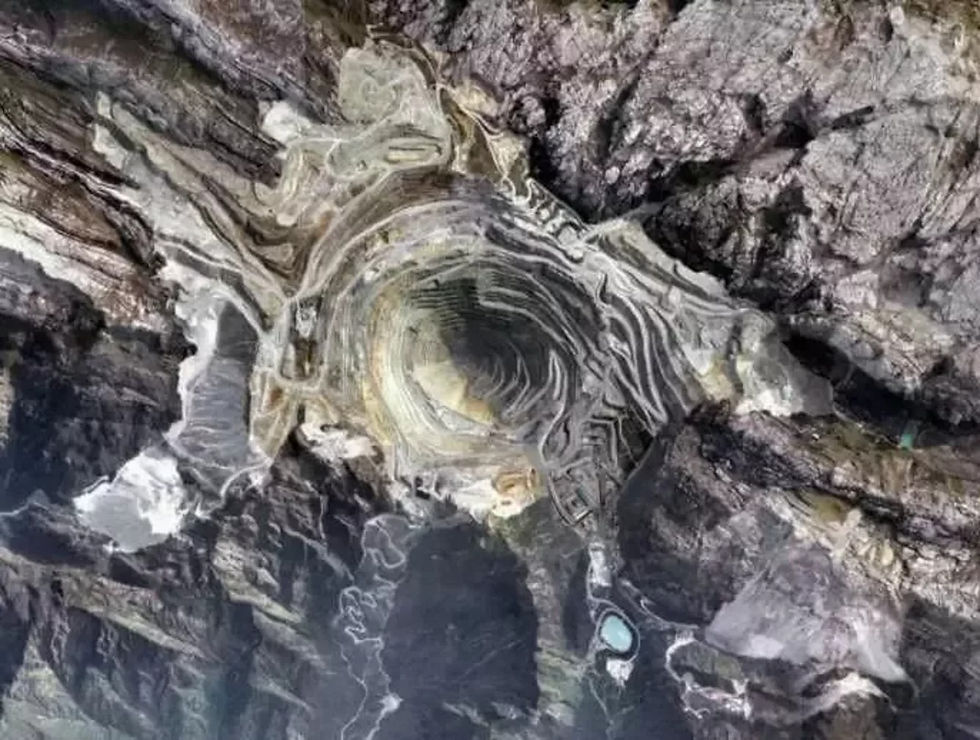
An open-pit mine is a type of mine where a large excavation is made in the earth's surface in order to extract minerals. Open-pit gold mining involves the removal of rock, soil, and vegetation overlying the gold deposit. Once the ore body is exposed, blasting is undertaken to break up the rocks. Massive machines such as haul trucks, excavators, and shovels are used to remove the material from the pit. It is then transported to processing facilities where it undergoes more processing.
Open-pit gold mining has the advantage of being less expensive than underground mining due to the lower cost of equipment and the ability to extract larger amounts of material. However, it also has significant environmental impacts, including destruction of land, water pollution, and loss of biodiversity. Efforts are being made by governments and the mining industry to minimize these impacts, including through reclamation and rehabilitation of the land after mining activities have ended.

Extracting Gold from Gold Ore
Gold processing is complex and involves several steps to extract gold from the ore body and prepare it for further refining. The specific processes used can vary depending on the characteristics of the deposit, but the general process remains the same. The first step is to crush the ore into smaller pieces, which is usually done using jaw crushers or cone crushers. Once the ore has been crushed, it is ground into a fine powder in grinding mills. This process helps to facilitate further processing, as it increases the surface area of the exposed gold particles and makes it easier for chemicals to dissolve them. Once it is a fine powder, it is then treated with chemicals to remove impurities and separate the gold from other minerals.

Cyanidation

Cyanidation is a commonly used process in gold mining, particularly in cases where the gold is finely disseminated or present in low concentrations. In this process, the finely milled powder is combined with a weak cyanide solution, which dissolves the gold into a soluble form. The resulting gold-bearing solution is separated from the remaining solids and further treated to recover the gold. This method of extraction is generally considered to be a highly effective means of extracting gold from low-grade ores or refractory ores as it may recover small amounts of gold that would otherwise be missed. However, it is also a hazardous process due to the toxic nature of cyanide, which is a highly poisonous and environmentally damaging substance. As a result, cyanidation must be carefully managed to minimize its impact on the environment and on public health and the use of it is regulated in many countries.
Carbon Absorption
Carbon absorption, also known as the Merrill-Crowe process, is commonly used in gold processing to recover gold from cyanide solutions. In this method, activated carbon or zinc is utilized to absorb the dissolved gold from the cyanide solution. The gold-loaded carbon or zinc particles are then separated from the solution, after which the gold is stripped or eluted from the particles. This process of carbon absorption has numerous advantages, including its effectiveness at capturing even trace amounts of gold from solution, as well as its ability to recover gold that may have been previously lost during other processing methods. The process can be easily and inexpensively scaled up or down to meet different production needs.
Mercury Amalgamation
Mercury amalgamation refers to an old method that used mercury to process gold. This method entailed mixing finely-ground gold ore with mercury, which would form an amalgam with the gold particles. The mixture would then be heated, vaporizing the mercury and leaving behind the gold. Although this approach was effective in extracting gold, it had serious environmental and health issues. Mercury is an extremely poisonous substance that can contaminate waterways and ecosystems if not disposed of appropriately. This contamination can cause environmental damage and pose risks to human health. Even though mercury amalgamation is no longer the preferred method for gold production, some illegal small-scale miners still use the method. The continued use of mercury has led to increased mercury pollution and its associated health risks to humans and wildlife. Governments and environmental bodies have undertaken various initiatives to make sure that mercury amalgamation is phased out and safer methods adopted instead.
Precious Metal Refining
Smelting
After the gold has been extracted from ore, it is often necessary to refine it in order to remove any remaining impurities and reach a high level of purity. This can be achieved through a range of different techniques, with smelting being one of the most common methods. In smelting, the gold is melted down and impurities are separated from it, allowing the pure gold to be retained. The process can be carried out using a variety of different furnaces, depending on the amount of gold being processed and the desired level of purity.

Electrolysis
Gold refining by electrolysis is a process that involves passing an electric current through a solution containing gold in order to selectively deposit the gold onto electrodes. The electrodes are then stripped and the gold is collected as a sludge or as flakes. This method is often used in industry to produce high-purity gold for use in jewelry, electronics, and other applications. Electrolysis is a highly efficient and precise process that enables the separation of gold from other metals and impurities, resulting in a purer, more valuable product. However, the process can also be time-consuming and expensive, requiring specialized equipment and trained personnel to operate and maintain the equipment.





Comments