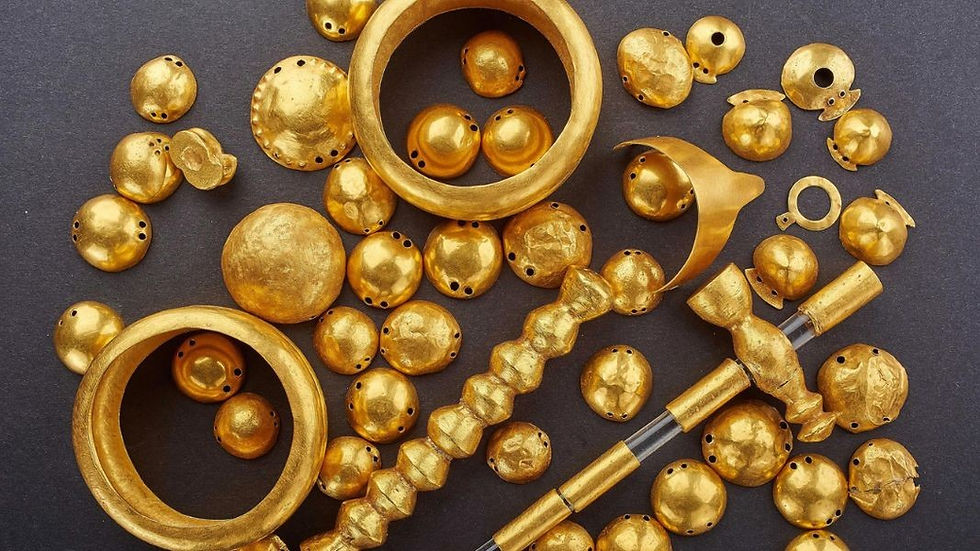

Gold was Discovered by the people of Varna, in modern day Bulgaria between 4,600-4,200 BCE which is 1500 years earlier than the ancient Egyptians or Sumerians who were initially credited with the find. The recent discovery of mines, tools, and gold artefacts is evidence the people of Varna first discovered gold.

DISCLAIMER: Alright Folks, this topic makes me unreasonably shirty due to the sheer volume of WRONG information on this subject proliferating on the web. Consider this your only warning as you're about to dive into several minutes worth of written nerd-rage about how it was the Ancient People of Varna in modern day Bulgaria and NOT the Ancient Egyptians who discovered and began working gold.
So, thanks for nothing lazy AI slop garbage articles, you may have got to the number 1 spot on google, but you are still wrong. Once again, dumbing down humanity, one cruddy piece of misinformation at a time.
Humans in Varna began mining and working gold so long ago, the last mammoth populations on Earth were still alive and kicking.

Fairly recent discoveries from archaeological sites in Varna, Bulgaria tell us that mankind has been mining and working gold for some 1500 years longer than previously thought. Gold has been used by mankind since before recorded history. So, unlike more recent inventions and discoveries, like Bluetooth or the lightbulb, we don't have evidence of who stole credit ..ahem... I mean, discovered it.
This makes it tricky to identify a specific 'who' when attributing the discovery of this precious metal. it's one of the few elements on the periodic table without an individual attribution assigned to it's discovery. This in itself is a testament to how ancient humanity's relationship with gold is. But on a slightly more idiotic note, attempting to find out WHO discovered it ,is somewhat similar to trying to figure out who discovered sunlight, or air, or toes.
Hopefully I've painted an adequate picture of futility.
Within the Varna Necropolis, archaeologists found numerous graves containing gold objects, including jewelry, ornaments, and ceremonial artifacts. Some of the notable gold items discovered include intricate gold pendants, bracelets, diadems, and appliques. The level of craftsmanship displayed on these artifacts suggests a sophisticated knowledge of metallurgy and early goldsmithing during that time.
The Varna Necropolis and its gold artifacts provide valuable insights into the social and cultural practices of the ancient civilizations that inhabited the region around 6,500 years ago. These discoveries also demonstrate the early significance and value attributed to gold as a precious metal. The meticulous care and placement of such treasures with the revered dead is an extremely similar practice similar to the Ancient Egyptians, and many other cultures and civilizations across the copper and bronze ages.
It may just be the sheer volume and fame associated with Ancient Egyptian funerary practices that has led to such a widespread misunderstanding about who the pioneers of goldsmithing and mining were. After that, all it took was for someone with expert level google search ranking knowledge but almost zero knowledge of history to perpetuate this bit of mass miseducation.
Dearest reader, marketing experts are not teachers or historians.

Evidence of Ancient Gold Mining
While the primary focus of the Varna Necropolis was burials, there is evidence to suggest that the wider region was involved in gold mining and metallurgical activities which greatly enriched this society.
Archaeological finds in the south western region of modern day Bulgaria have revealed remnants of placer gold mining activity dating back to the Copper Age as well as remnants of foundations and footings for metallurgy workshops in proximity to the mining locations. Other artefacts found in the same area indicate this was a known rich deposit for gold and other precious metals, and had been almost continuously mined right through to the end of the Roman Empire.

When Gold Was Discovered
Further evidence of gold mining during the Copper Age comes from other regions as well. Signs of early gold mining activity have been found at sites such as Wadi Hammamat in Egypt and Feinan in Jordan which were open-cut mines around 3000 BCE. The finds associated with these North African sites could contribute to the misunderstanding that the Ancient Egyptians were the first miners of gold. Yes, these are big flashy mines but that doesn't mean they are the first ones.
After all, the discoveries at the Varna Necropolis unearthed over 5kg of worked, high purity (23.5Kt to 24Kt) gold artefacts dated between 4,600 BCE - 4,200 BCE which firmly places the ancient Varna Civilization as the first known civilization to mine and work gold, long before the big flashy North African mine sites.
In other words, the sheer volume of gold artefacts, in an ancient civilization's site dated as 1200-1600 years OLDER than North African gold mining sites points to a defined, deliberate activity by a human civilization, by a big beefy country mile. This is not some random fluke event like a little girl being flung from Kansas into another dimension via tornado. Sorry Dorothy.

It would be foolish to attribute 1st place in this race to the Ancient Egyptians based on the sophistication and sheer size of their hole...ahem.
That would be akin to awarding the winner of a foot race to whoever shouts the loudest. This would be the height of dumb-assery, like the AI slop google is serving up about humanity's history with gold.
So there you have it. Humanity's historical relationship with gold mining and gold working, de-borked by an irritated rock and metal nerd. The ancient people of Varna were the first known civilization to mine and work gold way back in 4,600 BCE, not the Ancient Egyptians or Sumerians who started in 3000 BCE.



Comments