top of page
HomeEduHubParti SapphireParti Sapphire Meaning and Symbolism
PARTI SAPPHIRE

Parti Sapphire Meaning and Symbolism

By Khay · April 2026 · 5 min read

IN THIS GUIDE

6 articles in this series

Are Parti Sapphires Valuable? Price, Cuts & Buying Guide

6 min

Australian Sapphires: Characteristics, Ethics, Mining and More

6 min

Parti Sapphire Colors: Teal, Green, Purple & Bi-Color Gems

6 min

Parti Sapphire Origins: Australian vs. Montana Sapphires

5 min

Parti Sapphire: The Complete Guide to these Multi-Colored Gems

6 min

GEM SANCTUM FIELD GUIDE

Add a Title

Add a Title

Add a Title

Add a Title

Add a Title

Add a Title

Add a Title

parti sapphire rough from australia.png

Let’s lay the cards on the table: if you are searching for ancient, thousand-year-old mystical lore about parti sapphires, you are going to come up empty-handed. I’ve been a jeweller long enough that I can tell you that the jewelry industry loves to invent profound historical meanings to sell you things. We aren’t doing that here. We are going to look at exactly what these stones are, where they come from, and how you can assign your own genuine significance to them without the marketing spin.

What Is the True Parti Sapphire Meaning?

Historically, parti sapphires lack the ancient mythological pedigree of standard blue sapphires simply because the trade considered them commercially unviable. The true meaning of a parti sapphire is entirely modern and customizable, representing individuality, a departure from rigid tradition, and the beauty of natural geological processes.

DISCLAIMER: What really grinds my bench- peg is reading glamorous fluff articles claiming parti sapphires were revered by ancient royalty for their "dual energy." That is a complete fabrication. Up until a couple of decades ago, the gem trade tossed these multi-colored stones into the reject pile because they didn't meet the rigid, homogenous color standards of high jewelry. Pretending they have a deep, centuries-old astrological history is gemological blasphemy at worst. At best it’s historical fiction designed to move inventory, I’m still going to give you the stink eye though.

Where Parti Sapphire's Story Actually Begins

Caligula wore one. So did the bishops who came centuries later — medieval clergy put a blue sapphire on the right hand as the stone of divine truth and divine wisdom, by papal decree. Hindu astrology tied it to Saturn. Persian cosmology made it the foundation stone the earth sat on. The temple of Apollo at Delphi — seat of the ancient world's most famous oracle, the god of truth and prophecy — became, by way of medieval lapidaries linking truth-telling to sapphire, part of the same inherited weight. That's a heavy mythological lineage for one gem.


But every one of those traditions was talking about blue sapphire. The "sappheiros" of antiquity. The bishop's-ring stone. The truth-telling stone of medieval Europe. The lapidaries writing about sapphire's powers weren't picturing a stone that flashed teal one minute and gold the next.


Parti sapphire just wasn't on the lore-makers' radar.


Most of the world's parti material comes from Australia, and commercial Aussie sapphire mining is a relatively recent story. The Anakie gemfields in central Queensland — Rubyvale, Sapphire, Anakie, the Willows — opened in the late 1800s, but commercial-scale operations really hit their stride in the latter half of the twentieth century. By the time Australian sapphire was on the world map, blue's mythology was already a few thousand years old and pointed firmly at the stones from Asia.


And there's a second wrinkle. The historic Aussie miners were chasing blue too — that's what the trade wanted. When they hit a pocket of bicolor or tricolor rough, splitting between teal and gold, or yellow and green and blue all at once, it got tossed onto the spoils heap as "off-color" or "spoiled." Parti material sat on the ground for decades, kicked aside by miners hunting cleaner blue. Its worth was only properly recognized in the last few decades, once the trade twigged that the multi-color splits were a feature, not a defect. By then the mythological boat had sailed.

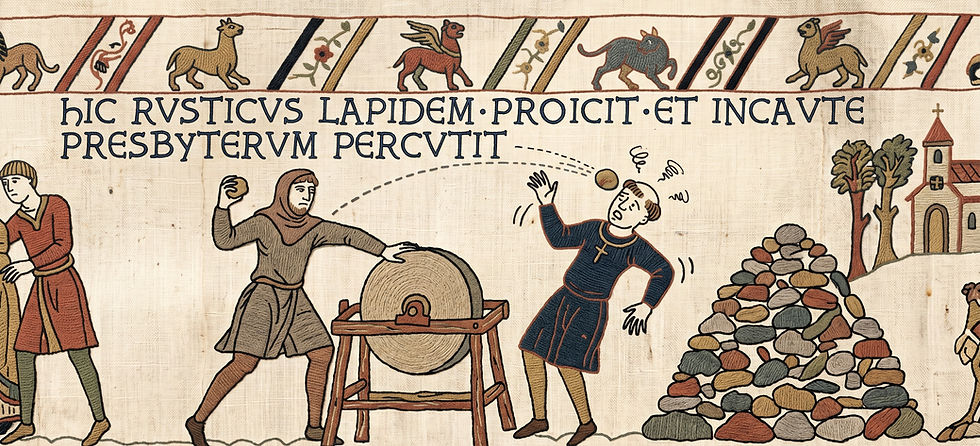
Medieval tapestry scene with a man throwing a stone at a priest. Text in Latin. Animals and church in the background. Stone pile visible.
If only they knew what they were yeeting.

So if you want a sapphire dripping in centuries of lore, blue is the answer — and a blue Aussie sapphire counts. Nothing about the bishop's-ring symbolism or the divine-truth tradition says the corundum has to come from Sri Lanka or Burma. Same mineral, same species, same chemistry as anything Pliny was writing about. The same goes for yellow, pink, green, or any other single-color Aussie sapphire — those carry their own established color-meaning traditions, just like other single-color gems do.


It's the parti sapphire that sits outside the inherited mythology. And honestly, that's part of its charm. No ancient priesthood prescribed how to wear it. No medieval lapidary text decreed its proper use. It's a modern story, freshly told, and the meaning gets written by whoever ends up wearing it

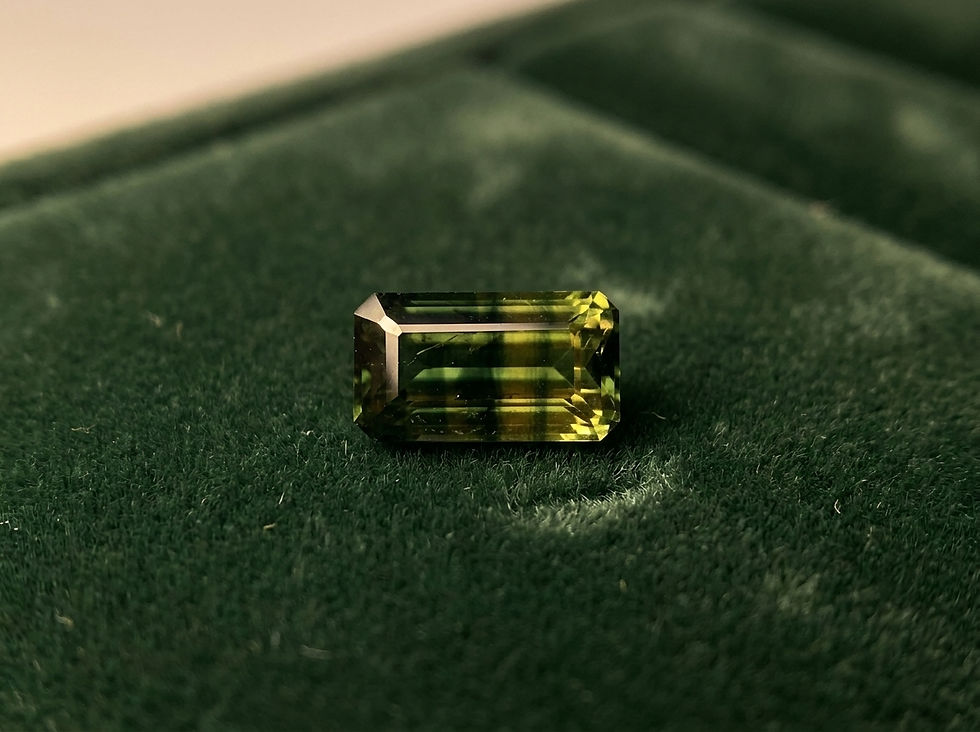
A rectangular yellow-green parti color sapphire rests on a dark green velvet surface, reflecting light.
"Parti sapphires are a visual record of chaos in the earth's crust. They wear their geological history right on their face."

Why "Commercial Rejects" Became Cultural Icons

For decades, the standard for a perfect sapphire was a uniform, velvety blue. Anything with a yellow streak or a green patch was viewed as flawed. The trade wanted predictability.

Consumers, however, eventually got tired of predictability. We saw a massive shift away from the cookie-cutter aesthetics of traditional bridal jewelry. People started asking for stones that looked entirely unique. Since the color zoning in a natural parti sapphire is formed randomly by trace element fluctuations, no two stones will ever look identical.

The symbolism shifted. Wearing a parti sapphire became a deliberate rejection of old-school, homogenous perfection. It represents the idea that uniqueness—even if the old guard considers it a "flaw"—is actually the most valuable trait a piece of jewelry can possess. Suddenly, the unpredictable multi-hued nature of parti sapphires became the driver of their value and appeal.


Khay's Professional Experience and Insight

Parti color sapphires lack the centuries of cultural history that build those rigid mystical connections. I actually view this as a massive advantage—it gives you a blank slate. If you choose a parti sapphire with a dominant blue zone, you can absolutely tie it to the classic sapphire virtues of wisdom and loyalty. If you pick a stone flashing green, yellow, and blue, let it symbolize your own multifaceted personality. The spiritual connotations are deeply personal. It is entirely up to you and the people you trust for spiritual advice to define what the stone means for your life.

This is the exact reason I love working with these gems at the bench. You don't have to fit your life into the historical narrative of the stone. You get to make the stone fit the narrative of your life.

Choosing Your Stone: Spiritual and Personal Symbolism

When you sit down to choose a parti sapphire, you are setting the symbolism aside. At that point, you are evaluating a physical object that you plan to wear every day.

If you are choosing between a traditional, heat-treated royal blue sapphire and an unheated Australian parti sapphire, you are weighing two entirely different visual experiences. I can map out the structural integrity of the crystal, ensure the setting protects the girdle, and give you the data on its refractive performance. But ultimately, deciding whether you want classic tradition or modern values is your call.

Takeaway: Parti sapphires do not possess ancient mythological lore, and any retailer claiming otherwise is lying to you. Their true symbolism lies in their unique geological chaos, offering a modern, hype-free canvas for you to project your own personal meaning onto their naturally color-zoned facets.

What specific color combination in a parti sapphire speaks most to your own personality?

KHAY

Gemologist & Goldsmith · Auckland, New Zealand

15+ years working with coloured gemstones. I write these guides from the bench — every claim is something I've tested with my own tools.

case study

Add a Title

gemline

excerpt

VIEW THIS COMMISSION →

EXPLORE THE COLLECTION

See {Gem Name} in the Inventory

Add paragraph text. Click “Edit Text” to update the font, size and more. To change and reuse text themes, go to Site Styles.

BEGIN A CUSTOM COMMISSION

EXPLORE MORE

Add a Title

Add paragraph text. Click “Edit Text” to update the font, size and more. To change and reuse text themes, go to Site Styles.

Add a Title

Add paragraph text. Click “Edit Text” to update the font, size and more. To change and reuse text themes, go to Site Styles.

Add a Title

Add paragraph text. Click “Edit Text” to update the font, size and more. To change and reuse text themes, go to Site Styles.

  • Apr 24
  • 5 min read

Updated: 5 days ago


Let’s lay the cards on the table: if you are searching for ancient, thousand-year-old mystical lore about parti sapphires, you are going to come up empty-handed. I’ve been a jeweller long enough that I can tell you that the jewelry industry loves to invent profound historical meanings to sell you things. We aren’t doing that here. We are going to look at exactly what these stones are, where they come from, and how you can assign your own genuine significance to them without the marketing spin.

What Is the True Parti Sapphire Meaning?

Historically, parti sapphires lack the ancient mythological pedigree of standard blue sapphires simply because the trade considered them commercially unviable. The true meaning of a parti sapphire is entirely modern and customizable, representing individuality, a departure from rigid tradition, and the beauty of natural geological processes.

DISCLAIMER: What really grinds my bench- peg is reading glamorous fluff articles claiming parti sapphires were revered by ancient royalty for their "dual energy." That is a complete fabrication. Up until a couple of decades ago, the gem trade tossed these multi-colored stones into the reject pile because they didn't meet the rigid, homogenous color standards of high jewelry. Pretending they have a deep, centuries-old astrological history is gemological blasphemy at worst. At best it’s historical fiction designed to move inventory, I’m still going to give you the stink eye though.

Where Parti Sapphire's Story Actually Begins

Caligula wore one. So did the bishops who came centuries later — medieval clergy put a blue sapphire on the right hand as the stone of divine truth and divine wisdom, by papal decree. Hindu astrology tied it to Saturn. Persian cosmology made it the foundation stone the earth sat on. The temple of Apollo at Delphi — seat of the ancient world's most famous oracle, the god of truth and prophecy — became, by way of medieval lapidaries linking truth-telling to sapphire, part of the same inherited weight. That's a heavy mythological lineage for one gem.


But every one of those traditions was talking about blue sapphire. The "sappheiros" of antiquity. The bishop's-ring stone. The truth-telling stone of medieval Europe. The lapidaries writing about sapphire's powers weren't picturing a stone that flashed teal one minute and gold the next.


Parti sapphire just wasn't on the lore-makers' radar.


Most of the world's parti material comes from Australia, and commercial Aussie sapphire mining is a relatively recent story. The Anakie gemfields in central Queensland — Rubyvale, Sapphire, Anakie, the Willows — opened in the late 1800s, but commercial-scale operations really hit their stride in the latter half of the twentieth century. By the time Australian sapphire was on the world map, blue's mythology was already a few thousand years old and pointed firmly at the stones from Asia.


And there's a second wrinkle. The historic Aussie miners were chasing blue too — that's what the trade wanted. When they hit a pocket of bicolor or tricolor rough, splitting between teal and gold, or yellow and green and blue all at once, it got tossed onto the spoils heap as "off-color" or "spoiled." Parti material sat on the ground for decades, kicked aside by miners hunting cleaner blue. Its worth was only properly recognized in the last few decades, once the trade twigged that the multi-color splits were a feature, not a defect. By then the mythological boat had sailed.

Medieval tapestry scene with a man throwing a stone at a priest. Text in Latin. Animals and church in the background. Stone pile visible.
If only they knew what they were yeeting.

So if you want a sapphire dripping in centuries of lore, blue is the answer — and a blue Aussie sapphire counts. Nothing about the bishop's-ring symbolism or the divine-truth tradition says the corundum has to come from Sri Lanka or Burma. Same mineral, same species, same chemistry as anything Pliny was writing about. The same goes for yellow, pink, green, or any other single-color Aussie sapphire — those carry their own established color-meaning traditions, just like other single-color gems do.


It's the parti sapphire that sits outside the inherited mythology. And honestly, that's part of its charm. No ancient priesthood prescribed how to wear it. No medieval lapidary text decreed its proper use. It's a modern story, freshly told, and the meaning gets written by whoever ends up wearing it

A rectangular yellow-green parti color sapphire rests on a dark green velvet surface, reflecting light.
"Parti sapphires are a visual record of chaos in the earth's crust. They wear their geological history right on their face."

Why "Commercial Rejects" Became Cultural Icons

For decades, the standard for a perfect sapphire was a uniform, velvety blue. Anything with a yellow streak or a green patch was viewed as flawed. The trade wanted predictability.

Consumers, however, eventually got tired of predictability. We saw a massive shift away from the cookie-cutter aesthetics of traditional bridal jewelry. People started asking for stones that looked entirely unique. Since the color zoning in a natural parti sapphire is formed randomly by trace element fluctuations, no two stones will ever look identical.

The symbolism shifted. Wearing a parti sapphire became a deliberate rejection of old-school, homogenous perfection. It represents the idea that uniqueness—even if the old guard considers it a "flaw"—is actually the most valuable trait a piece of jewelry can possess. Suddenly, the unpredictable multi-hued nature of parti sapphires became the driver of their value and appeal.


Khay's Professional Experience and Insight

Parti color sapphires lack the centuries of cultural history that build those rigid mystical connections. I actually view this as a massive advantage—it gives you a blank slate. If you choose a parti sapphire with a dominant blue zone, you can absolutely tie it to the classic sapphire virtues of wisdom and loyalty. If you pick a stone flashing green, yellow, and blue, let it symbolize your own multifaceted personality. The spiritual connotations are deeply personal. It is entirely up to you and the people you trust for spiritual advice to define what the stone means for your life.

This is the exact reason I love working with these gems at the bench. You don't have to fit your life into the historical narrative of the stone. You get to make the stone fit the narrative of your life.

Choosing Your Stone: Spiritual and Personal Symbolism

When you sit down to choose a parti sapphire, you are setting the symbolism aside. At that point, you are evaluating a physical object that you plan to wear every day.

If you are choosing between a traditional, heat-treated royal blue sapphire and an unheated Australian parti sapphire, you are weighing two entirely different visual experiences. I can map out the structural integrity of the crystal, ensure the setting protects the girdle, and give you the data on its refractive performance. But ultimately, deciding whether you want classic tradition or modern values is your call.

Takeaway: Parti sapphires do not possess ancient mythological lore, and any retailer claiming otherwise is lying to you. Their true symbolism lies in their unique geological chaos, offering a modern, hype-free canvas for you to project your own personal meaning onto their naturally color-zoned facets.

What specific color combination in a parti sapphire speaks most to your own personality?


Comments


bottom of page